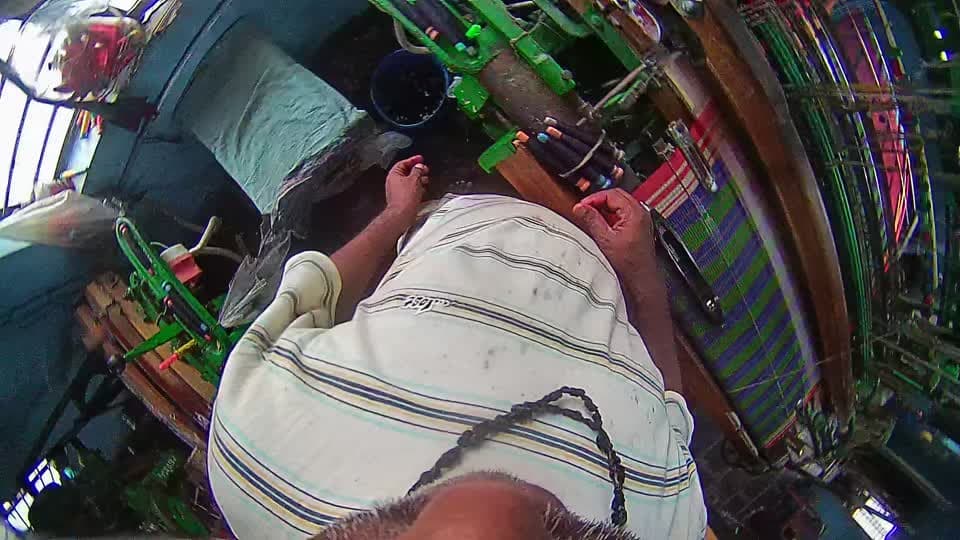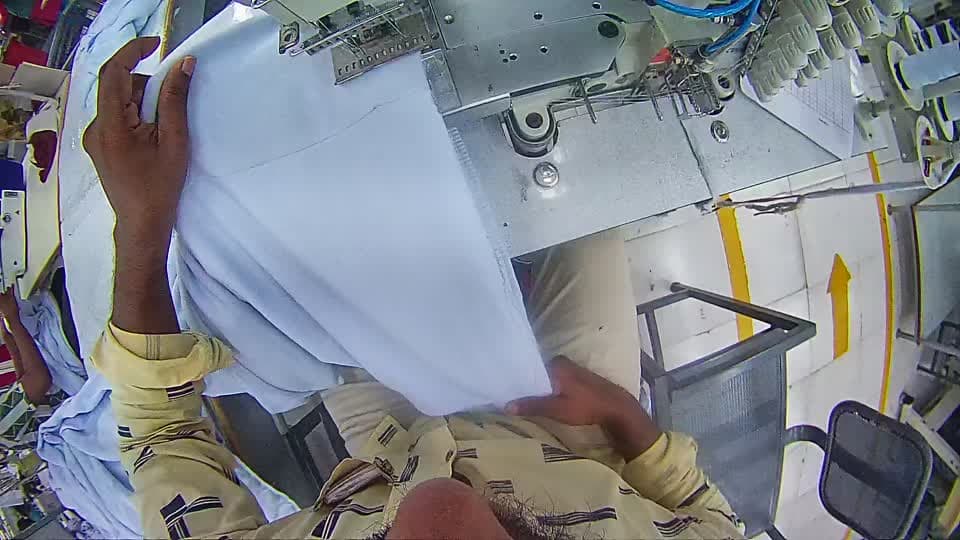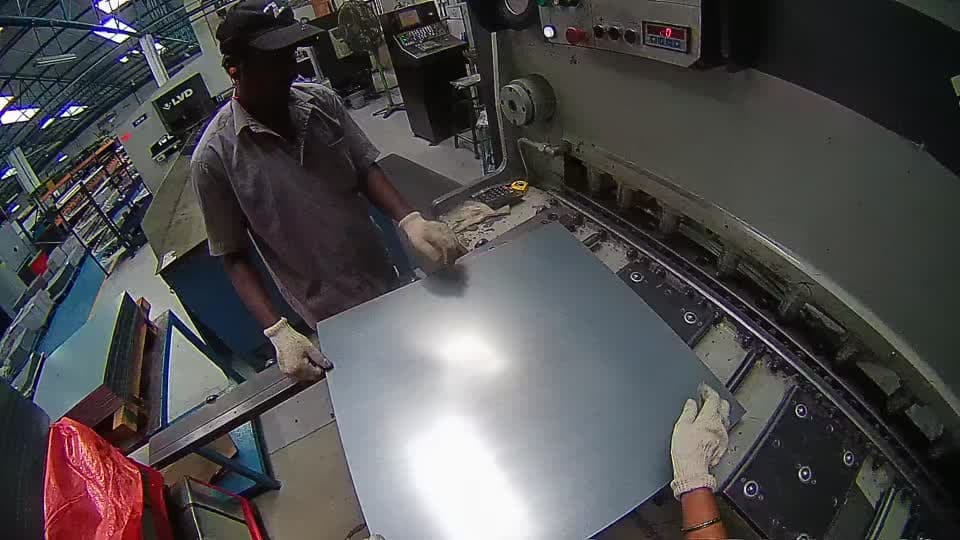
Most of the video that computer vision grew up on was filmed by someone watching an activity rather than doing it. A camera on a tripod, a phone held by a bystander, a broadcast feed. Egocentric data turns that around: the camera is worn by the person performing the task, so the footage shows the world the way the actor experiences it — hands in the foreground, the object just ahead, the next target entering the frame before the hand moves.
That shift in viewpoint sounds cosmetic. For teams building robots and other embodied systems, it is not. This article explains what egocentric data is, what a usable egocentric dataset contains, and why Physical AI models keep coming back to it.
A working definition
Egocentric data is any recording made from the first-person perspective of an agent carrying out a task. In practice that usually means video from a head-, chest- or glasses-mounted camera, often accompanied by other streams recorded on the same body: inertial measurements (IMU), audio, depth, eye gaze, or hand pose. The defining property is not the camera model but the anchor point — the sensor moves with the actor, so every frame is implicitly expressed in the actor’s own frame of reference.
That anchor point is exactly what a robot has. A manipulator with a wrist camera or a humanoid with head-mounted cameras sees the world from its own body, not from a tripod across the room. Training data that shares that geometry removes one of the largest gaps between what a model learns from and what it will face when deployed.
What egocentric footage captures that other video misses
Hands, contact and grasp
In third-person footage, hands are small, frequently occluded by the body, and often out of focus. In first-person footage they sit near the centre of the frame for most of a task. That makes it possible to see grasp type, finger placement, the moment of contact and how force is applied — information a manipulation policy needs and a spectator camera rarely records clearly.
Intent before action
Because the camera follows the head or torso, egocentric video tends to show where attention goes before the hand moves. The target appears in the frame, the view settles, and only then does the reach begin. For models that need to anticipate the next step — not just recognise the current one — that ordering is a useful training signal.
Real task structure
Real work is rarely one clean action. It is a chain: walk to the bench, pick up a tool, reposition the part, put the tool down, check the result. Egocentric recordings of complete tasks preserve that chain, including the transitions and corrections that scripted demonstrations tend to omit. Those transitions are where many robotic systems fail.
Why Physical AI depends on it
Physical AI covers systems that perceive and act in the physical world: robot arms, mobile manipulators, humanoids, assistive devices. These systems are typically trained with some combination of imitation learning, reinforcement learning and large pretrained vision or vision-language models. Each of those routes benefits from human first-person data in a different way.
- Imitation learning needs demonstrations. Human egocentric video is the cheapest way to collect large numbers of demonstrations across many environments, even when they are later retargeted to robot embodiments.
- Representation learning needs diverse, realistic visual input. Pretraining visual encoders on first-person footage of hands and objects gives downstream policies features that already emphasise contact and manipulation.
- Task and progress models need temporal structure. Segmented egocentric episodes teach a model what step comes next and when a step is complete.
None of this replaces robot data collected on the target hardware. It reduces how much of that expensive data is needed, and it covers environments and long-tail situations that would be impractical to reach with a robot.
What a usable egocentric dataset contains
Raw first-person video is a starting point, not a dataset. The teams that get value from egocentric data usually specify a package along these lines:
- Video at a resolution and frame rate that keep hands and small objects legible, with a documented lens and field of view.
- Synchronised side streams such as IMU, aligned to frame timestamps so head motion can be separated from object motion.
- Episode boundaries: a clear start and end for each task instance, not hours of continuous footage.
- Temporal segmentation into sub-actions (reach, grasp, lift, place) with a written definition of each boundary.
- Metadata on environment, task, capture rig and consent, so the data can be filtered and audited later.
- Delivery in a format the training stack already reads, for example LeRobot, RLDS or MCAP.
The difference between footage and training data is mostly in items two to five. We cover that conversion in more detail in From Raw Video to Training-Ready Data.
Common pitfalls
Egocentric collection has its own failure modes. Wide-angle lenses distort straight lines and object scale near the edges of the frame. Head motion can be fast enough to blur exactly the moment of contact. Collectors who know they are being recorded slow down and perform tasks unnaturally. And footage gathered in one kind of environment tends to produce models that only work there — a topic we expand on in Why Environmental Diversity Matters in Robotics Training Datasets.
Each of these is manageable with deliberate capture protocols: a fixed mounting position, calibrated lenses, briefings that ask collectors to work at their normal pace, and an environment plan written before collection starts.
Conclusion
Egocentric data matters to Physical AI because it is recorded from the same place a robot perceives from, and because it shows the part of a task models find hardest: hands making contact with real objects in real, untidy environments. Its value depends on what surrounds the video — synchronisation, segmentation, metadata and consistent quality checks.
Mvaak records and annotates first-person video of real tasks for robotics and Physical AI teams. See Egocentric Video Data for how collection works, or Physical AI data for how datasets are delivered. For a related read, see Why first-person video is different.
Written by Mvaak — AI Data Services.