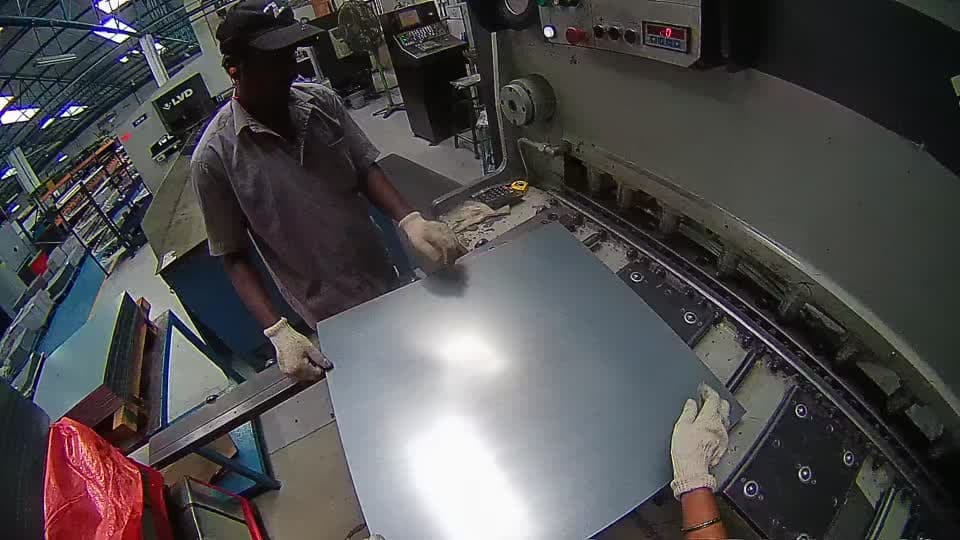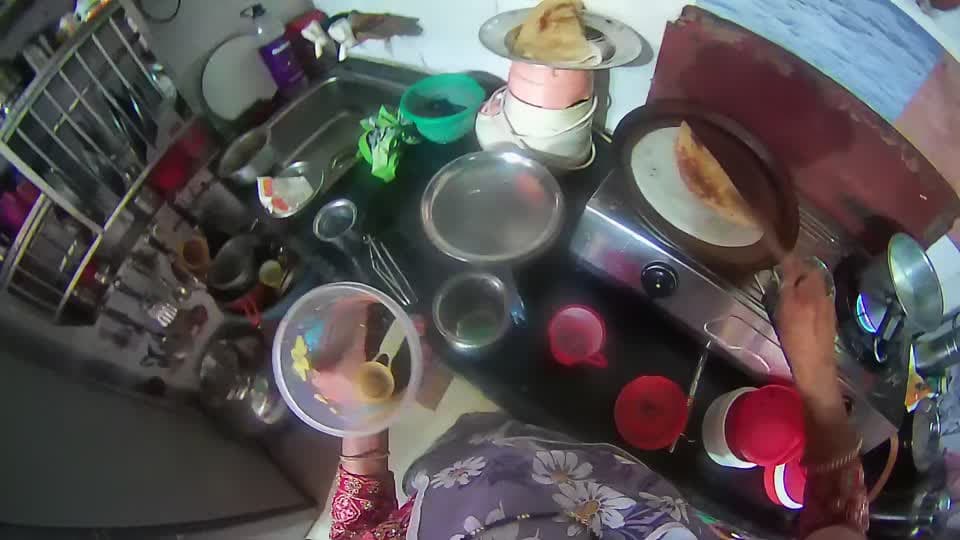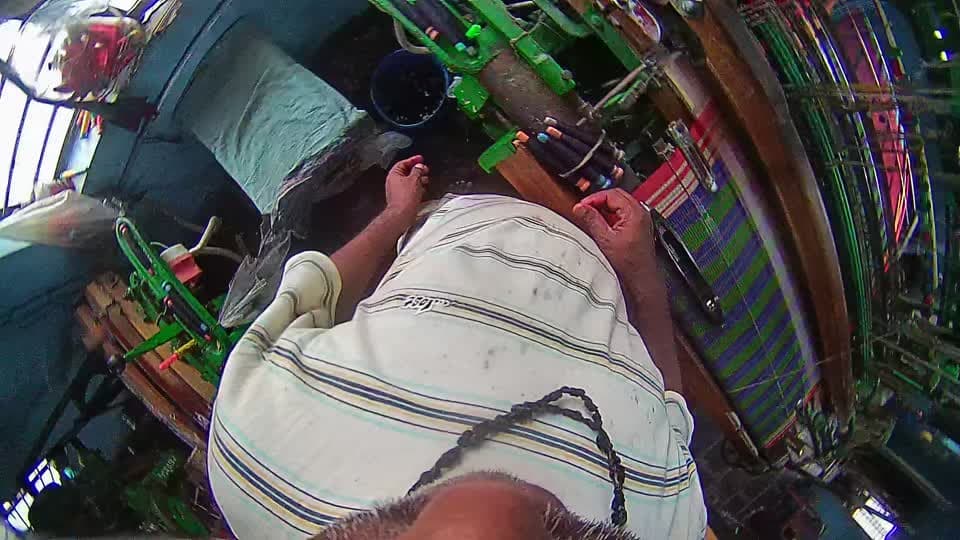
A person learning to use a loom does not rely on sight alone. They hear the shuttle, feel the tension of the threads, notice the rhythm of their own movement and follow spoken instructions. Each signal fills gaps the others leave. Multimodal AI rests on the same observation: models that combine several kinds of input are more capable, and more robust, than models limited to one.
This article covers what multimodal data is, why it is becoming central to AI systems — especially those that act in the physical world — and the data engineering problems that decide whether a multimodal dataset is actually useful.
What counts as multimodal data
A dataset is multimodal when each example contains more than one type of signal describing the same moment or event. Common combinations include:
- Video with aligned audio and transcribed speech.
- Images or video with natural-language descriptions or instructions.
- First-person video with inertial (IMU) data from the same headset or body-worn device.
- RGB video with depth, from stereo pairs or a depth sensor.
- Robot camera streams with joint states, gripper commands and force readings.
The value lies in the relationship between the streams. A clip and an unrelated caption are two datasets stored side by side, not one multimodal dataset.
Why AI is moving toward multimodality
Grounding
Language models know a great deal about the world in words. Pairing language with images, video and motion grounds those words in what objects look like and how they behave. Vision-language and vision-language-action models are the direct result: systems that can follow an instruction such as “put the red cup on the shelf” because they have learned what the instruction refers to visually.
Disambiguation
Single modalities are ambiguous. In video alone, a hand hovering over a stove might be cooking or reaching past it. Audio of a sizzle, a spoken instruction or IMU data showing the wearer turning away resolves the ambiguity. Combining signals improves accuracy precisely on the hard cases.
Robustness
When one sensor degrades — low light, motion blur, background noise — another can carry the prediction. Systems deployed in real environments, from assistive devices to warehouse robots, need that redundancy.
Multimodal data for Physical AI
Robots are multimodal by construction: cameras, joint encoders, force-torque sensors, sometimes microphones. Training data that mirrors that structure lets models learn the correlations they will rely on at run time. In egocentric collection this usually means first-person RGB video combined with IMU data that records head motion, so a model can tell camera movement apart from object movement, plus temporal labels describing what the wearer is doing. Some projects add stereo video for depth, covered in Stereo vs Mono-RGB Capture.
What multimodal datasets get wrong
Synchronisation
The most common and most damaging problem is misalignment. If IMU samples are offset from video frames by even a fraction of a second, a model learns the wrong relationship between motion and image. Every stream needs timestamps from a shared or calibrated clock, and the alignment should be verified, not assumed.
Missing or partial streams
Sensors drop out. Audio clips, IMU buffers overflow, a depth camera fails in sunlight. A dataset needs a policy for partial episodes — exclude, flag or impute — and the policy must be documented so model builders know what they are training on.
Inconsistent labels across modalities
When transcripts, action labels and object labels are produced by different teams, their boundaries rarely line up. A spoken instruction might be labelled as starting half a second before the action it describes. Shared annotation guidelines and a common timeline prevent this. Our article on annotation guidelines explains why the guideline is the real deliverable.
A checklist for multimodal collection
- List the modalities the model will see in deployment, and collect those first.
- Calibrate sensors and record calibration files with each session.
- Use a single timeline for all labels, expressed in a documented time base.
- Validate synchronisation on a sample of every delivery.
- Ship a manifest describing which streams each episode contains and their quality flags.
Conclusion
Multimodal data is becoming the default input for capable AI systems because the world itself is multimodal. The opportunity is large, but it is unlocked by careful data engineering: synchronised streams, consistent labels and honest documentation of gaps.
Mvaak collects and annotates video, audio and text data, including egocentric video with aligned sensor streams. Explore our video annotation, audio annotation and egocentric video services.
Written by Mvaak — AI Data Services.