What actually makes training data usable
Volume is the easiest property to measure and the least predictive of whether a dataset improves a model. Here is what tends to matter instead.
AI Data Services
Mvaak helps AI companies collect, annotate, validate and prepare high-quality data for training intelligent systems.
The Data Layer
AI models depend on the quality, diversity and structure of the data they learn from. Mvaak helps turn real-world information into datasets designed for AI development.
Human judgement applied where a rule cannot decide — ambiguity, edge cases, and the examples that determine whether a label set actually holds.
Written guidelines, human review against those guidelines, and consistency checks before anything is marked complete.
Workflows designed to hold the same standard as a project grows, rather than trading accuracy for throughput.
Built around how models are actually trained and evaluated, so the output loads into your pipeline rather than needing to be rebuilt.
Where the signal originates
Captured or sourced to specification
Structured against a written guideline
Reviewed by people, not just scripts
Shaped into your schema
Loads into your training pipeline
Data Types
Four categories, one operating standard — so a corpus assembled across more than one of them stays internally consistent.
How Mvaak Works
Five stages, run the same way every time. The specification is agreed before anyone starts producing data — which is what makes the last stage predictable.
Understand the model, the use case and what the dataset actually has to teach it.
Collect or source relevant real-world data against an agreed specification.
Structure and label the data according to the project's written guideline.
Apply human review and quality assurance against that same guideline.
Prepare structured datasets for downstream AI and ML workflows.
Applications
Each application draws on a different mix of the four data types. Where a project spans more than one, the same guidelines and review standard apply across all of them.
Fed by
Quality
Useful AI requires consistent data. Mvaak builds quality control into the data lifecycle — from collection and annotation guidelines through to human validation and final delivery.
The failure mode we design against is a dataset that looks complete and teaches the wrong thing. That is usually a definitions problem, not an effort problem, which is why the guideline comes before the work rather than after it.
Capture or sourcing against a defined specification, so the input is already in scope.
A written definition of correct, with worked examples and explicit edge-case handling.
Trained annotators working to that guideline, escalating ambiguity rather than guessing.
Structural and consistency checks across the batch, not just within single items.
Review by a second person against the acceptance definition.
Structured delivery with the guideline and review notes attached.
Scalability
Most data requirements are not fully known at the start. Engagements are structured so the specification can be proven on a small scope before volume is committed.
Validate the dataset requirement on a bounded scope before committing to volume.
Expand collection and annotation once the specification has proven itself.
Support recurring and larger requirements against the same operating standard.
For AI Data Partners
Need additional capacity for data collection, annotation or quality assurance? Mvaak can work as an execution partner behind your AI data projects — to your specification, under your delivery standard.
About Mvaak
Automation handles the parts of data work that are genuinely mechanical. It does not handle the part that decides whether a dataset is any good — the judgement calls at the edges, where an example does not quite fit the schema and someone has to decide what it means.
Mvaak is built around that division of labour: structured process where process works, and trained human review where it does not. The result is data that behaves consistently at the scale a model actually sees it.
Insights
FAQ
If yours is not here, the fastest route is to tell us what you are building — the answer usually depends on the model.
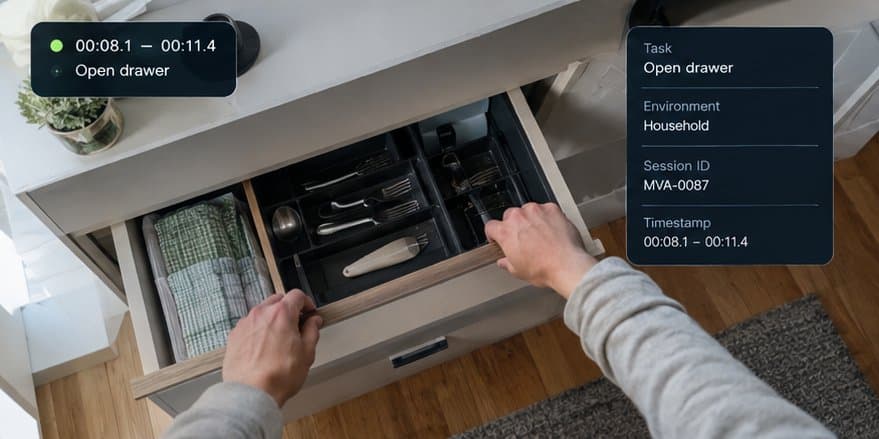
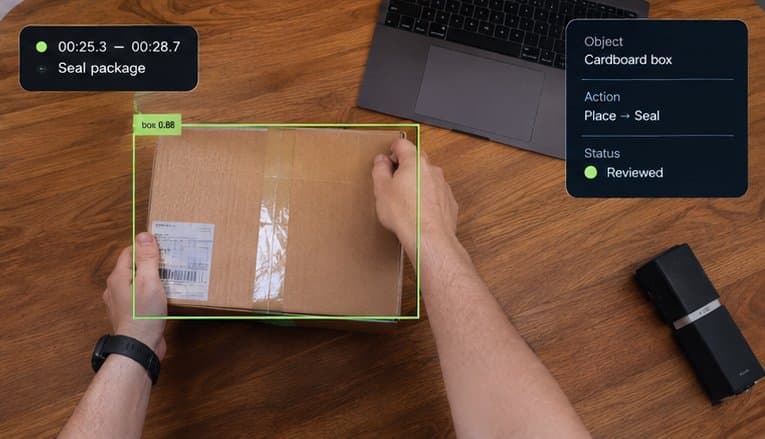
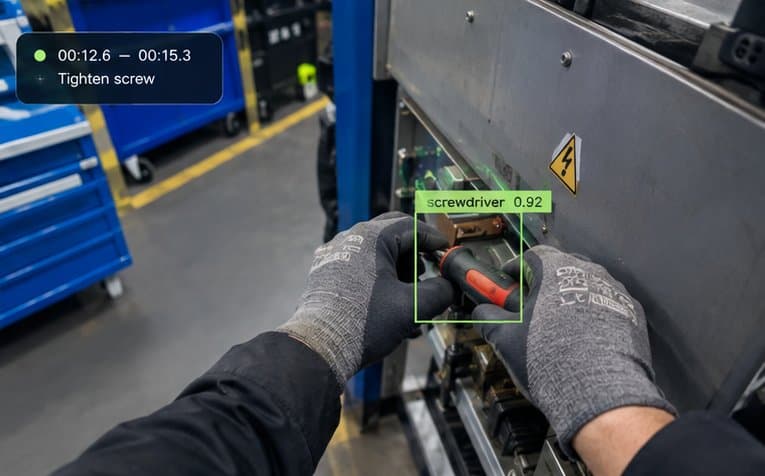
Four categories: egocentric video, annotated audio, annotated video and annotated text. Each can be collected, annotated, validated and delivered in a structure agreed with your team.
Tell us what you’re building, what data you need and the scale of your project.